-- Business blog now available --

A quick note to say that I've set up my Business blog, to be able to speak with a clear voice on both personal and work issues (i.e. by having separate blogs).
Showing posts with label amazing. Show all posts

Saturday, 13 January 2018

Resources for a Teenager – Atul Gawande

The third in a series of posts detailing those resources I’m finding useful on my own particular (life) journey.

Meta

I think these lectures – and the thinking behind them – are extraordinary.

I listened to them in the car on a couple of long journeys.

I’ve recently started reading Atul’s personal exploration ‘Being Mortal: Illness, Medicine and What Matters in the End’. It’s also excellent, and timely for me to read it.

The List


The rationale

I read Atul Gawande’s book ‘The Checklist Manifesto’ and loved it.

I thought it common sense but which hasn’t be common practice, until Dr Gawande’s efforts to improve global public health.

I was therefore delighted to learn that he would be delivering the BBC’s Reith Lectures.

I’ve copy-pasted the following info from the BBC’s website to save time etc.

Dr Atul Gawande - 2014 Reith Lectures

Atul Gawande, MD, MPH is a practicing surgeon at Brigham and Women's Hospital and Professor at both the Harvard School of Public Health and Harvard Medical School.
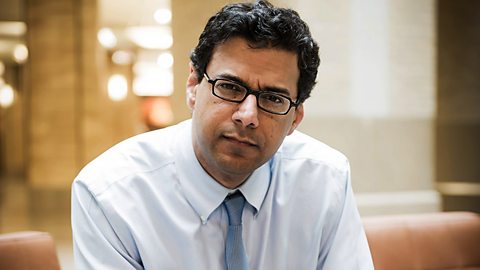
In his lecture series, The Future of Medicine, Dr Atul Gawande will examine the nature of progress and failure in medicine, a field defined by what he calls 'the messy intersection of science and human fallibility'.

Known for both his clear analysis and vivid storytelling, he will explore the growing importance of systems in medicine and argue that the future role of the medical profession in our lives should be bigger than simply assuring health and survival.

The 2014 Reith Lectures

The first lecture, Why do Doctors Fail?, will explore the nature of imperfection in medicine. In particular, Gawande will examine how much of failure in medicine remains due to ignorance (lack of knowledge) and how much is due to ineptitude (failure to use existing knowledge) and what that means for where medical progress will come from in the future.

In the second lecture, The Century of the System, Gawande will focus on the impact that the development of systems has had – and should have in the future - on medicine and overcoming failures of ineptitude. He will dissect systems of all kinds, from simple checklists to complex mechanisms of many parts. And he will argue for how they can be better designed to transform care from the richest parts of the world to the poorest.

The third lecture, The Problem of Hubris, will examine the great unfixable problems in life and healthcare - aging and death. Gawande will argue that the reluctance of society and medical institutions to recognise the limits of what professionals can do is producing widespread suffering. But research is revealing how this can change.

The fourth and final lecture, The Idea of Wellbeing, will argue that medicine must shift from a focus on health and survival to a focus on wellbeing - on protecting, insofar as possible, people’s abilities to pursue their highest priorities in life. And, as he will suggest from the story of his father’s life and death from cancer, those priorities are nearly always more complex than simply to live longer.

The Task

Atul Gawande strikes me as an outstanding role model.

Our challenge is to rise above our everyday conditioning and aim to be as good as Dr Gawande in the things that we are passionate about, and which bring us to life.

It’s easy to quote Ralph Waldo Emerson
"Do not go where the path may lead, go instead where there is no path and leave a trail."
The tricky bit is sailing towards the horizon and not knowing where you're going. It's spectacularly more difficult than you might expect...

As one of my Mentors said to me:
"Justin, it's not about leaving A to get to B, it's about leaving A"
Thank you Steve!

Goodreads

I endeavour to record what I’m reading via my profile on Goodreads.

Wednesday, 10 January 2018

Resources for a Teenager – ‘Living’

The second in a series of posts detailing those resources I’m finding useful on my own particular (life) journey.

Meta

I’ve chosen these books to hopefully be an accessible way into cultivating inner knowledge, and valuing our inner teacher [or whatever you would like to call it…].

IMHO there is no ‘correct’ way to live, only continual experiments in vulnerability and courage.

I’ve come to believe it’s a life-long practice, with many speed bumps along the way #crikey

The List

To grow, as I come across new materials and / or think of additions.


The rationale

  1. Daring Greatly: Brené is reframing vulnerability so that we can welcome it as a superpower. I’m coming to the belief that vulnerability is a vital stepping stone to presence, and that we are fortunate to live in a time to absorb her wisdom for ourselves.
  2. A Hidden Wholeness – Parker’s work powerfully resonates with me. I’ve attended three retreats – and counting – based on the insights of the Centre for Courage and Renewal. Their ‘Clearness Committee’ format is the most respectful and dignified way to hold other people which I have come across.
  3. What shall I do with my Life? – I remember reading this and thinking: that’s actually really helpful.
  4. Sophie’s World – IMHO we should teach philosophy to Primary Schoolers. A brilliant way to create a coherent understanding of the major schools. These are thinking skills and a mind gym we can all benefit from.
  5. Mindset [& Bounce] – a vital contribution from Carol Dweck about the Growth Mindset. Aka all feedback is an opportunity to learn, no matter how difficult it might be at the time.
  6. When Things fall apart [and they often do] – Ani Pema’s synthesis of this Buddhist lineage will be something I expect to return to time and again. In fact Ani Pema’s ability to convey profound wisdom is something I greatly value. I plan to return to her work in different formats, in future.
  7. Man’s search for meaning – out of some of humanity’s darkest hours emerges some rays of light. Night, by Elie Wiesel, taps into the same elemental forces.
  8. Quiet – I came away from reading this by thinking that I could well be an introvert, with extrovert tendencies. Perhaps an ‘ambivert’. A fascinating reframe…
  9. The Hero with a Thousand Faces – who would have thought that humanity shares many ways of thinking about our existence, when so often we (collectively) seek to differentiate our wisdom traditions?
  10. The Art of Asking – just ‘take the doughnuts’: aka let people help you. Something I’ve found very useful myself!
  11. Heart Sutra – something to come back to whenever needed. I understand the preamble better than I do the Sanskrit…!
  12. Update: Wherever You Go, There You Are: Mindfulness meditation for everyday life - Jon created the mindfulness-based stress reduction (MBSR) class [something I've done, and continue to practice].

The Task

It’s been said that there are many ways to live life. Our individual challenge is to figure out a way that works for us, at our deepest levels (and even to discover them in the first place…).
Onwards!

Goodreads

I endeavour to record what I’m reading via my profile on Goodreads.

Sunday, 7 January 2018

Resources for a Teenager - blog series

Intro

Living can be a challenge. Feeling like you’re connected - a jigsaw puzzle when the pieces fit together – is a challenge for most of us.

When you love a parent, and lose them before you might reasonably expect to, I can only imagine it’s incredibly difficult.

I thought it’d be helpful to breathe life back into this blog - after a prolonged quietude – by making a record of those of the resources I’m finding useful on my own particular journey.

I’m offering them here so that others may refer to them, choose what resonates, and read, watch, mark, and inwardly digest to support a life more fully lived.

I hope they are useful!

Materials

I’m planning to coalesce my findings – to begin with – about ‘Living’; Economics; and Fiction.

These signposts will (probably) be books; videos; blogs & online articles; and podcasts.

I’ll hopefully have bandwidth to provide a minimalist commentary.

Series

I plan to embed a number of widgets in these posts.

It may well be that the order is a bit haphazard (according to the collation of various types of materials), and that the order is the type of material, rather than the theme. I’d apologise, but better to ship than be perfect… ;D

Feedback

Any thoughts, additions, amendments – whatever – please add in respectful and constructive comments to the posts. Thank you!

Saturday, 6 October 2012

Brené Brown and wholeheartedness

Introduction


A quick post about a recent discovery I made, and grateful for the serendipity that brought me!

I recently gained a new Twitter follower, @kabbenbock, over at @souterconsults. I usually find out about new followers through an e-mail alert, and those with bios that resonate with me I check out, and follow back, as appropriate.

@kabbenbock IRL is Andy Smith, who I was aware of him as one of the authors of The Dragonfly Effect: Quick, Effective, and Powerful Ways to Use Social Media to Drive Social Change.

I felt flattered to be followed by someone like Andy, and checked out his Twitterstream before tweeting my thanks for the follow. One of his tweets was:

Kare Anderson’s article includes this quote:
Ironically, the sharing of one’s vulnerability with trusted others is one of the prime gateways to overcoming shame according to the star of one of the ten most watched TED talks, Brene Brown. In Daring Greatly, she describes the paradoxical power of embracing our vulnerability and acknowledging our fears as a path towards being more courageous and connected with others. That means letting go of the need for certainty and control.
This intrigued me, and I sought out Brené’s TED talk.

Brené Brown

The following is an except from Brené Brown’s bio page:
Brené Brown, Ph.D., LMSW is a research professor at the University of HoustonGraduate College of Social Work. She has spent the past decade studying vulnerability, courage, worthiness, and shame.  
Brené is a nationally renowned speaker and has won numerous teaching awards, including the College’s Outstanding Faculty Award. Her groundbreaking work has been featured on PBS, NPR, CNN, and has appeared in The Washington Post,Psychology Today, and many other national media outlets.

Her 2010 TEDxHouston talk on the power of vulnerability is one of most watched talks on TED.com, with approximately 5 million views. She gave the closing talk, Listening to Shame,  at the 2012 TED Conference in Long Beach. 

TED Videos

The videos are below. The first has now reached 6.1m views; the second is on its way towards 1.5m. Half a dozen of these combined views are from me! ;-)

The Power of Vulnerability


The blurb for this TED talk is:
Brené Brown studies human connection -- our ability to empathize, belong, love. In a poignant, funny talk, she shares a deep insight from her research, one that sent her on a personal quest to know herself as well as to understand humanity. A talk to share. (Filmed at TEDxHouston.)  

Listening to Shame


Blurb for this one is:
Shame is an unspoken epidemic, the secret behind many forms of broken behavior. Brené Brown, whose earlier talk on vulnerability became a viral hit, explores what can happen when people confront their shame head-on. Her own humor, humanity and vulnerability shine through every word.
IMHO even more powerful than the first talk. I love Brené’s admixture of vulnerability, insight, and joy. Thank you, Brené! :-D

I've put in YouTube versions of these talks as they're easier to tweak to fit in the blog design...

Videos for further context

I've gone a bit crazy with all these videos, but this for me is extraordinary stuff! Let me know if it takes an age to load...

TEDxKC - Brené Brown - The Price of Invulnerability


Shame & Empathy by Dr. Brené Brown


Resources

Check out Brené’s resources page for links to videos, podcasts, and online articles.

Books

I’m still in the early stages of exploring Brené’s work, however I’ve cued up Brené’s books on my Amazon wishlist:
  1. I THOUGHT IT WAS JUST ME (BUT IT ISN'T): Telling the Truth About Perfectionism, Inadequacy and Power
  2. The Gifts of Imperfection: Let Go of Who You Think You're Supposed to be and Embrace Who You are
  3. Daring Greatly

Podcasts

I’m a big fan of podcasts, and have listened to the Smart People Podcast interview with Brené. The first 5 minutes or so are context, which I’ve fast-forwarded when I’ve listened to the podcast again! ;-). Direct link

You may also want to check out this interview with Koren Motekaitis with is rather tremendous. Direct link.

Wholeheartedness

On of the key outcomes for Brené’s research has been that some people are what she calls “wholehearted” – in summary, they are confident that they are ‘enough’ and worthy of other people’s love.

I guess that’s the point of her writings, so I plan to read them after Loving What Is by Byron Katie, and Coming to Our Senses by Jon Kabat-Zinn. The books-to-read pile is growing! ;-)

Graphics

These are some graphics from Brené’s website which I am posting here to bring to a wider audience. I’m seeking to “be the change I’m trying to create”.


Wash up

I’m sharing these materials as they have resonated strongly with me. Whilst I’m keen to read all three books straight away, I sense that part of me is seeking in them “the answer” which I am coming to realise doesn’t really exist. I am confident that they will, however, be part of the solution!

I also like the idea that they are something to ‘move towards’, rather than ‘move away from’ – in the words of a buddy of mine. That puts Brené’s work in the same category as the positive psychology movement, in that it is creating new skills, rather than sorting out the past. Time to leave the past and create the future!

UPDATE 06/10/12: Added link for podcast interview with Koren Motekaitis.

Thursday, 4 October 2012

The Power of TED* - summary presentation to Action for Happiness North East

Introduction


Although I am an avid student of personal development materials in order to become more present and mindful, I am deeply indebted to my learnings from The Power of TED*. TED, in this instance, refers to the Empowerment Dynamic.

This post is a reflection on how much I have gained from my (so far) six readings of the book!

Slide deck

Way back in the Spring I presented this summary slide deck to Action for Happiness North East, a group I help found earlier this year, and about which I’ve already blogged about here.


TED* Library

Check out the TED* library, full of podcasts, articles, and videos. Mmm, podcasts! I am still a regular listener to these podcasts, to help embed my learnings.
The following videos are linked through from the library page.

Describing TED* (*The Empowerment Dynamic)

David Emerald describes TED*

Master Certified Coach Molly Gordon Talks TED*


Reflections

Key things I have learned from both reading the TED* book, and attending the TED* for Coaches webinar series:
  • Decide what you’re for
    • It was surprisingly challenging to find answers to the question “what do I really want, what am seeking to create”
  • Taking quiet time in the mornings
  • See other people as creators
    • Everyone has potential – it is up to us to be connected with the creator in other people
  • Interpret life situations through the lens of the empowerment dynamic
    • Although much of life seems to correspond to the Drama Triangle, I find it more empowering to keep in mind what one wants to create!
  • Choose choice
    • We’re all at choice, all of the time. It’s empowering to know this, and to consciously choose choice and choose to be a creator.
I could carry on in this vein – however this’ll do for now ;-)

Wash up

Reading The Power of TED* and working to absorb the lessons has been a watershed moment for me. I feel really grateful to be able to take on the learnings, and happy to share them with others – and answer any questions.

Definitely worthwhile saying many thanks to both David Emerald and Donna Zajonc for their help in my growth!

Sunday, 27 May 2012

How can you learn greater well-being? What is Positive psychology? -- Some insightful concepts

Introduction

I was pleased to be able to attend another showing of the movie ‘Happy’ – hosted by Dr Deborah Jima-Otero at the Newcastle Centre for Positive Living, part of Northumbria University.

I was grateful to do this, as I had become aware of what I believe is some really insightful wording relating to positive psychology, in the context of a course run from October 2011 to help attendees improve their quality of life, and well-being.

Deborah kindly assented to me reproducing the wording – with the appropriate attribution.

Descriptive text from NCPL’s “Eight week programme in positive living”

This is verbatim from the course outline:
Dr Deborah Jima-Otero and Dr Matthew Lewis from The Newcastle Centre for Positive Living (NCPL) at Northumbria University are pleased to announce their eight week programme in positive living, starting on 20th October 2011 every Thursday 6.30-8.30pm, for members of the general public.
Leading people to positive lives
Using scientifically validated exercises from the field of positive psychology, the programme aims to introduce participants to techniques which will enable them to experience more positive emotions and flourish in life.   It will seek to help the group of participants to assess their personal well-being and satisfaction with life; plan a meaningful and satisfying life for themselves and try out various exercises which are aimed at increasing positive emotions and decreasing negative emotions.  These guided exercises will be completed during the weekly sessions and in the participants' own time between these sessions.

What are the benefits of positive emotions beyond ‘feeling good’?

Research has shown that positive emotions have a number of beneficial effects, beyond simply ‘feeling good’. 
Happier people:
  • Are more creative and better at problem solving – Positive emotions broaden people’s outlook, bringing more possibilities into view.  Greater openness makes them more creative as they are more likely to let go of preconceived ideas and think outside the box.
  • Are more productive and successful – They are more engaged both at work and play and tend to take less time off work due to sickness.
  • Are more resilient – They tend to bounce back from life’s setbacks more quickly.
  • Experience more fulfilling relationships with others - They are also more likely to help other people and benefit from social support themselves.
  • Are healthier – They tend to lead healthier lifestyles and research has shown that they even live longer!

What is positive psychology?

Positive psychology is at the heart of much of our work at the Newcastle Centre for Positive Living (NCPL).  In a nutshell, positive psychology is the scientific study of optimal human functioning and is concerned with positive aspects of human life such as happiness, well-being, flourishing, engagement, meaning, accomplishment, and positive relationships.  The aim of the field is to redress the imbalance that has emerged in the field of psychology from emphasising ‘misery and suffering’ (i.e., shortcomings such as depression, anxiety, drug addiction, schizophrenia and post-traumatic stress disorder) to understanding factors that make life worth living (i.e., potentials and human strengths).

Building ‘psychological immunity’

Positive psychology is keen to promote the idea that the full range of emotions have their place in human existence and that we need to give ourselves the permission to be human and accept that we all experience life’s ups and downs. So positive psychology is not about being ‘happy clappy’ but about being real.  However, it espouses the view that through hard work and practicing scientifically validated interventions (and experiencing setbacks along the way!)  individuals can learn resilience and build up their ‘psychological immune system’.  The idea is that, like physical immunity, individuals with a strong psychological immune system may still ‘get sick’ but this happens less frequently and when setbacks occur they get over them more quickly.

Prevention through cultivating the positive

Positive psychology is not targeted at fixing problems (i.e. remedial) but works on getting people to their upper range of well-being.  If you imagine a scale of well-being ranging from -10 to 0 to +10, psychology has traditionally focused on getting people who may be a -8 on the scale up to 0 or 1.  Positive psychology, by contrast, also focuses on those who may be at 0 or +1 or +2 and teaches them how to get to +8 or +10.  It helps individuals who may be ‘getting by’ in life to truly flourish, find meaning, and build resilience. In this respect it is much more preventative in its approach.  For example, Martin Seligman the founder of the field of positive psychology, has found in his research that learning optimism prevents depression and anxiety in ‘at risk’ children and adults, roughly halving their incidence over the next two years.
also
Finally, we would like to point out that you may find this course personally challenging at times as it may involved changing deeply entrenched habits. We do not advocate the view that there are a few ‘easy steps’ to happiness. Instead, we believe it takes commitment, motivation and hard work. We aim to support and encourage you on this journey but ultimately the main drive and effort needs to come from you. That said, you also need to accept that you will experience challenges and setbacks along the way – these are all part of being human!

Take away

Key points for me:
  • Well-being and meaning is something that can be developed and grown – chiming with my recent reading of ‘Mindset’ by Carol Dweck, and ‘Bounce’ by Matthew Syed
  • Well-being and happiness is about being authentic, and raising one’s “mean” state of experience
  • Going through the exercises is personally challenging
  • I really like the idea of a “psychological immune system”
Arguably these are incredibly important life skills that many more people would benefit from, and deserve to be part of a wider set of life skills courses that form part of everyone’s basic education. What do you think?

Thursday, 19 April 2012

“What are the skills that build positive emotion, gratitude, optimism, purpose, engagement in life?”

Intro

Since last June, I've been working with a start-up called http://happie.st. Our tagline is 'get rewarded for doing the things that make you happy".

I've come across some awesome personal development materials since then, and have got stuck into a lot of podcasts, DVDs, books, articles etc. ;-). For the eagle-eyed, you probably already know that! lol

This post records some of my recent discoveries, and the inspiration they provide:
  • Some reflections by Martin Seligman, arguably the moving spirit behind Positive Psychology, and someone I first learned about on my Psychology undergraduate degree – as he had convincingly put forward the theory of ‘learned helplessness’.
  • A summary from Time magazine about Positive Psychology
  • Links to some courses on Positive Psychology I have found (in the UK)
  • Widget showing some of my Goodreads books and account

Marty Seligman

I find listening to a podcast of someone gives a fantastic flavour of the person, and whether I’m going to enjoy / like / benefit from their writings.

Marty at the RSA

Martin Seligman at the RSA in London: I've listened to his podcast, and it’s highly insightful and enjoyable. Full disclosure: I used to be a Fellow of the RSA.

MAPP programme promotion podcast

Having searched iTunes for ‘Martin Seligman’, I was also listening to another podcast, and found the early proceedings highly meaningful.

I’ve listened to a particular section a number of times, and I've (roughly) typed up a couple of minutes the proceedings of the Virtual Information Session (http://www.sas.upenn.edu/lps/graduate/mapp) from about 4mins 30secs - involving Marty Seligman:
  • "Back 8 years ago, when I found myself president of 160k psychologists, I asked myself the question "what do psychologists do well?", "what don't we do well?"
  • I thought what we did pretty well was suffering: depression, trauma, anxiety, anger, victims and the like
  • But, what psychologists didn't do well, what there was no science, no practice of, was what makes life worth living: positive energy, positive emotion, engagement
  • So, as I looked around, I decided that my initiative as president of that Association would be to cheer-lead for, raise money, do some of the science, or the possibility of a science of practice, on what makes life what worth living, the positive side of life
  • I should say that what was behind that was some of my experience as a clinical psychologist, as a therapist for many years
  • And initially, I had believed that all you needed to work on was suffering; if you got rid of suffering, you automatically got happy
  • We were astonished to find out in clinical practice that occasionally when things went really well and you were able to alleviate anxiety, depression, anger: you didn't get a happy person, you got an empty person
  • So the question was, so what are the skills that build purpose and meaning in life, they're different from relieving depression? What are the skills that build positive emotion, gratitude, optimism, purpose, engagement in life? And so that became my mission
  • [...]
  • Starting about 4 / 3 years ago, as the science was beginning to develop along, I began to become concerned about application; that is, how can we take the things we're learning about gratitude, about pleasure, about strength and virtue, about creating purpose, and bring them into the real world"
I feel the point about an 'Empty person' is incredibly powerful, certainly for my own life. I'd actually bought 'Learned Optimism' (http://amzn.to/J6djq7) a couple of weeks back, and I'm also reading 'Happier' (http://amzn.to/Jrve7w).

I feel that this will be a rich vein for investigation and learning for me. I find the description of ‘empty’ a trigger to do practical things to build my own levels of positive emotion, gratitude, optimism, purpose, and engagement in life :-D

I'd be fascinated to hear any thoughts and feedback you may have. By the way, MAPP stands for ‘Master of Applied Positive Psychology’.

Courses

For now, studying at the University of Pennsylvania, at Martin’s knee, is a bit of a long shot, so here are some closer to home:

Time document

Useful summary of Positive Psychology which puts things into a nutshell:
The New Science of Happiness

Goodreads widget

I’m whacking this in here, as it’s a useful place for me to share what I’m reading :-)


Wash up

I hope you find these materials useful and insightful. I’d love to get your feedback, and what else you’d suggest. Thanks for reading!

Wednesday, 29 February 2012

Happy Movie press release


Introduction

I’m also posting supporting materials to accompany the recent event where I was part of a group which showed The Happy Movie. This is the press release we prepared. Links etc. in the final section.

PRESS RELEASE

Issued: 27 January 2012

POP-UP CINEMA BRINGS GLOBAL ‘HAPPY’ EVENT TO THE NORTH EAST

clip_image002
A merry band of happiness promoters is bringing the documentary film, Happy, by Oscar nominated Director Roko Belic, to the North East. It will be screened for one day only at a ‘pop-up cinema’ at the Centre for Life, Newcastle on World Happiness Day, February 11th. On the same day the film will be enjoyed in communities across the globe, from Sao Paulo to Singapore as people celebrate what it means to be happy, who is happiest and how we can contribute to the happiness of others.
Despite the credentials of the Director, the film does not currently have a distribution deal through cinemas and can only be seen at special screenings like this one. It is being hosted by a small group of North East based supporters of happiness, wellbeing and positive psychology who hope it will inspire viewers to join them a new movement to promote happiness in the region.
With real-life people and stories, the film brings to life the findings of most happiness and wellbeing research which shows that good family, social and community relationships, rather than wealth and status, are what really make us happy. Roko Belic learned a lot about the nature of happiness and what is important in life while making the film. He said,
“I learned something simple but completely illuminating. Research showed that just about all happy people have strong relationships. They are healthier and have happier children. They are more likely to find a creative solution to a problem and to help a stranger in need. Happy people have fewer conflicts and are less likely to commit crimes, pollute the environment or go to war. In other words, just about everything I cared about, everything I wished I could change in the world, was improved with being happy.”
“The greatest lesson I learned while making this film is that my pursuit of happiness is not about me. It's about our relationships and how we help each other. It's about us.”
Paul Hemphill, one of the organizers of the Centre for Life screening said:
“Our event will be so much more than a typical cinema screening. The doors will open an hour beforehand for the chance to chat and make new friends over a drink. And then afterwards, for those who want to stay, there will be time to discuss the film with a panel of local experts. We hope that the whole event will be an incredibly rewarding and potentially life changing experience for everyone who attends.
Tickets to see the film should be bought in advance online and cost £10 or £7.50 (concessions) from Eventbrite.com. The doors open for the matinee screening at 2pm and for the evening screening at 6:30pm.
##Ends##

Notes to editors

1. The organisers of the event in Newcastle are five small business owners with interests in coaching, personal development, training, wellbeing and organisational improvement. They are; Mike Cockburn (Sogno), Paul Hemphill (Horizons Coaching), Jan Etoile (Etoile Enterprises), Justin Souter (Souter Consulting), and Emily Sweetman (Emily Sweetman Limited)

Contact details:

Mike Cockburn: @mikesogno
Paul Hemphill: @HorizonsLife
Jan Etoile: @etoileenterprises
Justin Souter: @justingsouter
Emily Sweetman: @emzo1968
2. The quote from Director Roko Belic is taken from an article in the Huffington Post:
http://www.huffingtonpost.com/roko-belic/happy-documentary_b_1220111.html
3. World Happy Day 11 February 2012: “World HAPPY Day inspires action for increasing happiness in our own lives and in the world. A growing body of research shows that happy people are healthier and live longer. They are more likely to care for the environment and less likely to commit crimes or go to war. Happy people help others more often... and are more likely to find creative solutions. Increasing happiness benefits us as individuals and communities in infinite ways and is a goal worth sharing.” See http://www.worldhappyday.com/
4. The film Happy combines cutting-edge science from the new field of positive psychology with real-life stories of people from around the world whose lives illustrate these findings. We see the story of a beautiful woman named Melissa Moody, a mother of three who had a “perfect life” until the day she was run over by a truck. Disabled for nine years and disfigured for life, amazingly she is happier now than before her accident. Manoj Singh, a rickshaw puller from the slums of Kolkata, India who lives in a hut made of plastic bags with his family, is found to be as happy as the average American. Through these and other stories HAPPY leads us toward a deeper understanding of how we can all live more fulfilling, healthy and happy lives. See http://www.thehappymovie.com
5. Screenings take place at 3pm (Doors open 2pm) or 7.30pm (Doors open 6:30pm) at Centre for Life conference centre, Newcastle on Saturday 11 February 2012. Tickets cost £10 or £7.50 (concessions). Matinee tickets from http://happynortheastmatinee.eventbrite.com and evening tickets from http://happynortheastevening.eventbrite.com/
6. This Happy movie press kit includes biographies and photographs
www.thehappymovie.com/files/HAPPY-Press-Kit.pdf

Happy Movie - reflections

Intro

This posts details how we got on at the Centre for Life with our matinee and evening showings of The Happy Movie.
I’m also posting some supporting materials, which I will update in a couple of weeks – I want to get this all live before it gathers dust! ;-)

Centre for Life = fantabulous

I’d firstly like to say how grateful we are to the Centre for Life and their team, led by Owen, who did a tremendous job making everyone feeling welcome and putting on the show without a single glitch – bravo!

Photos

I took these before everyone arrived. We sold 20 tickets for the matinee, and nearly 40 for the evening. Happy times! :-D

Discussion sessions – interesting thoughts / quotes

It’s them what came that made it

We had a great bunch of people who came, watched the movie, and discussed their thoughts afterwards. We had some really interesting points made, mainly around communities rather than individual happiness. The following sections represent a sample of them.

Afternoon

  • “I’d sacrifice the pawn to save the queen any day”
  • “There’s no one key to happiness, it’s different for everyone”
  • Concerns about the lack of community in our Communities; and a related discussion about the Diamond Jubilee – it doesn’t matter what you think of the Monarchy, “the point is to have the party
  • Targets / key performance indicators in schools – “measurement kills happiness”
  • We talked about the concept of ‘Pay it Forward
  • A passionate point about giving children the chance “to be aware”
  • It was felt that managers in any organisation could be kept ‘grounded’ by having them rolling up their sleeves and often working with customers and front-line staff

Evening

  • A quick discussion about choosing to be happy
  • We discussed meditation, e.g. mettā bhāvanā
  • “After a week on my own, I craved the company of other people”
  • Our focus also took in random acts of kindness [see also The Kindness Offensive]
    • There was a great point made – if  you’re doing random acts of kindness, then you’re more likely to notice them in other people
    • Check out this awesome London Underground site which document stories of kindness :-D
  • “If you’re looking for good things, you’re more likely to see them”
  • We talked through the difference and relative merits of experiential versus existential happiness – i.e. is happiness something that can be built and increased, or is it something that is innate?
  • “it’s about the acceptance of yourself”

My thoughts

  • The movie is quite challenging: in a constructive way
    • We all have our preconceived ideas, and it’s healthy to have them compared to other perspectives, and ways of living
    • Amazing to watch a rickshaw puller, living with his family in a shanty - who is obviously a very happy person, and lives in harmony with his neighbours
  • Not everyone is thinking “how can I be happier – or more fulfilled?”; I was instructive to remember that “nobody is broken, and nothing needs fixing”

Thanks to my colleagues

Whilst I don’t wish this post to turn into a schmaltzy love-in, however I’m really grateful that we as a group were able to make this happen, and share the movie with the North East. So, credit where it’s due to:
Mike Cockburn: @mikesogno
Paul Hemphill: @HorizonsLife
Jan Etoile: @etoileenterprises
Emily Sweetman: @emzo1968
Onwards!

Friday, 3 February 2012

Join us for the North East Premiere of 'HAPPY' on World HAPPY Day

Background

You may be aware that I’ve been working at happiest Limited since last June. I feel very fortunate to have learnt a great deal, and discover a treasure trove of resources around the practice of happiness. I.e. that one’s level of happiness and well-being is something that one can grown, through regular practice and habitual behaviour.
This post provides the context to a happiness-related event I’m involved in organising in Newcastle upon Tyne, and invites you to attend and bring your friends!

Happiness at Work event

I was thrilled to attend the recent Happiness at Work event, organised by Codeworks:
This month we’re taking a different approach to our Think and a Drink event with the topic of Positive Psychology and its effects in the workplace.  We’ve got speakers and discussions and even a chance of taking part in some of the very first research studies on the subject with our friends at Northumbria University.  Here’s a little taster of what you can expect.
Positive Psychology is a new branch of Psychology which focuses on enabling people to grow and fulfil themselves. Professor Martin Seligman, who is generally credited with igniting the interest in positive psychology when he was appointed President of the American Psychological Association in 1998, describes it as enabling people to ‘flourish’. A positive psychological state in which we feel positive emotions, engagement, achievement, positive relationships and a sense of meaning in our lives.
Research also demonstrates that a positive psychological state seems to protect against illness and prolong longevity. It also enhances resilience, very important given the challenging and unpredictable economic climate we are experiencing.
At that event, the seeds of local action were sown, so please read on for details of the event in February.

We’re showing a movie, and you’re invited!

We’re showing a movie on 11th February in Newcastle upon Tyne. Once in the afternoon, and for the second time in the evening. Please use these links to book online.
The following is the descriptive blurb:

Happy People = Happy World

On World HAPPY Day, February 11, 2012, thousands of people will join together in communities across the globe to watch the film HAPPY and begin their journeys toward healthier, and happier lives. We want everyone in the North East and Cumbria to be part of this amazing, worldwide event so we are screening the film twice, at 2.00pm and 6.30pm, at The Centre for Life in Newcastle.
World HAPPY Day inspires action for increasing happiness in our own lives and in the world. Research suggests that happy people are healthier and live longer, they are more likely to care for the environment and less likely to commit crimes or go to war. Happy people help others more often and are more optimistic and creative. Increasing happiness benefits us as individuals and communities in infinite ways – it is a goal worth sharing.
Roko Belic, director of the Academy Award® nominated “Genghis Blues” now brings us HAPPY, a film that takes us from the bayous of Louisiana to the deserts of Namibia, from the beaches of Brazil to the villages of Okinawa to explore the secrets behind our most valued emotion.

Screening Programme

Afternoon
2.00pm ‘Happy Networking’ – an opportunity to relax over a drink, catch up with friends and meet lots of new, like minded people
3.00pm ‘HAPPY’ – be one of the first in the North to experience the inspiring new film by Roko Belic
4.30pm ‘Happy talk’ – share your feelings about the film, learn more about the psychology and growth of happiness and find out more about forthcoming Happiness events, including the foundation of a Happiness group in the region.
5.30pm Event draws to a close
Evening
6.30pm ‘Happy Networking’ – an opportunity to relax over a drink, catch up with friends and meet lots of new, like minded people
7.30pm ‘HAPPY’ – be one of the first in the North to experience the inspiring new film by Roko Belic
9.00pm ‘Happy talk’ – share your feelings about the film, learn more about the psychology and growth of happiness and find out more about forthcoming Happiness events, including the foundation of a Happiness group in the region.
10.00pm Event draws to a close

The Film


Happy - A Documentary Trailer from Wadi Rum Films on Vimeo.
For more information about ‘HAPPY’ go to - http://www.thehappymovie.com

How you can get involved

Please come and join us – the links again: afternoon and evening. Come to both if you like ;-). Key activities:
  • share your feelings about the film,
  • learn more about the psychology and growth of happiness and
  • find out more about forthcoming Happiness events, including the foundation of a Happiness group in the region.

Monday, 5 December 2011

#Movember monkey's tail update, & ‘Mo Down’ - please donate!

Context

Previous posts (Movember: please help raise money to combat men’s cancers & Movember Shave-down) have explained how I am raising money to combat, and raise awareness about, men’s cancers such as prostate and testicular ones.
This post is to bring everyone bang up to date, and sign off by encouraging you to keep giving using this link please!

Becoming Jimmy Hill

Those of you with strong constitutions may wish to check out my scary Dr Who-like regeneration into Jimmy Hill below.
There are three sets of photos in this Flickr slideshow – basically the two last weekends in November, and in fact the final shots are before and after the epic trim yesterday. I hadn’t realise quite how long the Movember monkey’s tail had become!
Apologies due to Jimmy – I’ve always thought actually he’s a really decent bloke (as his Wikipedia profile attests) :-)

Lady Greys bar Mo Down

To finish off the Movember movement in style, us Lady Grey’s bar team members gathered for a drink this past Wednesday. At the bottom of this post, you should find a widget with the results.
Not particularly wanting to see myself without my normal facial hair, I gave myself a two week run-up without trimming my beard, so that I’d have something to talk about from the off! I’d actually opted out of the competition because I chose to start not clean-shaven…
Highlights from these photos include Cameron, who reminded me of Ron Mael from Sparks, but I think that’s probably wrong (although any suggestions gratefully received!). Also, Peter – who had to have his fluff enhanced with mascara [not sure where that came from…!].
To cap it all, there’s James with the wrap-around ‘tache, with a roundel at the back reminding me of that geezer with the thing on his forehead, from Stargate SG-1.
At the time of writing, our team has raised £458, so I’m hoping to boost this through further donations! Thank you :-D

Thursday, 15 October 2009

Gastroscopy

I’m posting this bunch of bullet points as is, otherwise this ain’t going to get posted at all… :-s

I’ve got a photo of my duodenum, but need to find it and scan it…

Cast

  • Pam, the super efficient ward sister with the excellent bedside manner
  • Lesley, the lady with the scanner (radiographer??)
  • The good Doctor
  • Caroline – who took me
  • My Mum, who picked me up

Chronology

  1. Admittance into Gastro-enterology
  2. Own cubicle, cubicle’s own hand wash
  3. Explanation of choice between
    1. Throat spray
    2. Sedation
  4. Explanation of procedure
  5. Chose throat spray
  6. Doctor arrives, I sign disclaimer
  7. Go into ‘operating room’
  8. I marvel at the gastroscopy equipment
    1. Looks like something out The Matrix 
  9. Doctor gives me throat spray
  10. Bed, turn on my left hand side
  11. ‘Bit’ to go between my teeth – aargh!
    1. It’s a plastic thing with a hole big enough to have the ‘camera’ put through it, and so you don’t damage the equipment by biting on it - yeeuch
  12. Gizmo fed into my mouth
  13. Deep breathing, steady breathing
  14. Suction thing like dentists
  15. Swallow
  16. Swallow again
  17. Gizmo into my stomach
  18. Further down, into duodenum for a look around
    1. Makes me feel a bit sick
  19. Air being pumped in makes me burp a lot
  20. Gizmo used to take samples – duodenum
  21. Back into stomach for a look see
  22. Concern because of saliva & breathing
  23. Back out again
  24. Thanks heavens!
  25. Lesley gives me photo
  26. Recuperation
  27. 45 minutes after spray
  28. Mum comes to collect
  29. Rather tired last night
  30. Have a sore throat today – unsurprisingly. Rather like a ‘sore throat’ caused by illness.

Initial test results

The biopsy taken from my duodenum was put into some ‘agar jelly’ containing lactose, along with a colour indicator. Apparently those with lactose intolerances normally turn the indicator a sky blue colour. I managed to turn it navy blue, which means a severe lactose intolerance.

The good Doctor also mentioned I have mild gastro-oesophageal reflux disease (apparently). Although looking at the symptoms, I don’t seem to suffer from this…

Results of blood test? Need to recall / check documentation

Reflections

  • Would have been good to have some kind of hand signals to communicate
  • Lack of control
  • Anxiety over pipe in mouth, & breathing
  • Throat spray vs. sedation

Deep joy – not.

Tuesday, 10 February 2009

Seaton Canoe & the Transporter Bridge

Yesterday turned out to hold an unexpected pleasure. I was travelling down to Teesside to hook up with @dmaxxx at Digital City Business.

David has done a grand job with the SCL business plan, and we had a washup session yesterday, after he’d finished the plan at the end of January.

*Anyway*, the traffic stopped around 10 miles North of Middlesbrough, near the Elwick turn-off. I called the BBC Jambuster line to report the problem.

The incredibly helpful man told me that I should head for Hartlepool, go through Seaton Carew and over the Transporter Bridge – completely new territory for me.

So, re-programmed SatNav to the fore, I went
The highlight, undoubtedly, was the £1.20 trip across the Tees using the Transporter Bridge. Photos on Flickr.


Transporter Bridge across the River Tees from Justin Souter on Vimeo.

Heaven knows how long it took the folk still on the A19 to get into Middlesbrough, but I was only 30 minutes late – genius! 

Tuesday, 13 January 2009

Is Diners Club listening to the Groundswell?

diner's club
A different type of diner’s club ;-). Photo credit to MamaT
A rant about not being able to get my money from Diners Club – the charge card people.
Set of bullet points to summarise the situation (from my perspective, of course):
  • I have over-conscientiously credited £550 to my Diners Club account – i.e. to pay off what I thought was an outstanding balance
  • I would like the money back – i.e. I don’t want to spend it
    • Anyway, not many places actually take Diners
    • I’m not staying in hotels, so haven’t got any big ticket things to spend the balance on…
  • I first start asking for my money to be wired to my current account, probably back in October
    • however, there’s some technical issue or other
  • I also wanted to pay off my credit card – but they couldn’t do that either
    • I thought the credit card was owned by the same company, but I now find that Diners Club has been sold by Citigroup [find out who has bought them]
  • Because it hasn’t happened, I’m wondering whether Diners Club is deliberately retaining my credit balance because they are affected by the Credit Crunch
    • I’m rather worried I’m not going to see the money again
  • Supervisor
    • There never seems to be a supervisor to talk with
    • I have been promised a supervisor call-back on two occasions – it hasn’t happened
    • Either they haven’t called, or they haven’t called my mobile
    • Presently I have no messages on the landline number they have for me, and I don’t recall their supervisor calling on my mobile
  • That said, Diners have a great first line
    • Plaudits especially to Juliet – extremely helpful, patient and courteous
    • Also, Shirley
    • There’s no point having a pop at the call centre people – they are told to speak to a script, and have little discretion.
Anyway, I have no confidence in Diners Club as an organisation, and I’m writing this because I want my money back!
The title of this blog relates to whether I will get satisfaction from Diners Club in the UK because they are listening to people like me to blog and tweet about corporations – although I think not.
If that’s the case, then I will use this post in future to agitate for better Customer service through social media tools like Twitter etc..
I have posted to my personal blog, as it’s a personal matter, but it could be an interesting case study!
I’m going to get in contact with their UK head office – Google led me to this post with contacts details for the Chief Executive’s complaint wrangler.
Update: I've hopefully removed all the apostrophe's from Diners, apart from the photo credit...

Sunday, 21 December 2008

Read all about it: Wellbank in good hands!

A post about how the namesake of this blog is prospering under new management.

Field Fishing
Photo credit to Ajnabeee. More photos tagged with ‘Wellbank’. fyi a place in Scotland called Wellbank.

I was at the Codeworks Connect Christmas party 10 days ago. There I bumped into Andrew Robson, its outgoing Chairman. Andrew is the boss of Perfect Image, an IT systems integrator in the North East of England.

The ever-genial Andrew ventured that he knew something about me that I probably wasn’t aware of. I immediately thought “Oh no, what have I done *this* time?”.

It was therefore with a mixture of fond memories and slight wonderment that Andrew announced that he and his family now live in my Granny’s old house – blog post passim.

So, we proceeded to have a long chat about the history of the house, and what the Robsons have done to refurbish the house. We talked about:

  • My Uncle floating this slippers in the bath, and jumping down the stairs
  • The marvellous outside loo
  • How they had found some fascinating stuff, e.g. university newspapers and some books[?] from the late 19th century.
    • uni newspapers
    • 1880s records
  • What needed to be done about refurbishing the house

Apparently (and thankfully) they have left the garden pretty much the same. And Don the Gardener still comes to look after the garden when he can. :-)

So, a happy story and good to think that my roots are in good hands.

More news as I have it.

Technorati Tags: ,,

Friday, 4 April 2008

Big up Gourmet Spot! :-)

Allow me to say a big "Thank You!" to Dr. Raj Naik, proprietor of the Gourment spot and surgeon Queen Elizabeth II Hospital, Newcastle, UK (amongst other things).

An amazing gastronomical evening last night, with "Post-Modern Food" on the menu - cooked with Liquid Nitrogen, Dry Ice, and all sorts of confections. Raj and Sean the chef prefer Post-Modern Food to another term, molecular gastronomy - which you may be more familiar with.

We were privileged to be part of chef Sean Wilkinson's experimental evening, and to be joined by Sam and Dominic from Animmersion, Janice and Graeme Webster, and also Caroline Theobald (aka my lass)

Those of you following me on Twitter will know I'm interested in Virtual Worlds. Recently I was lucky enough to attend an RSA organised demo of a 3d appendectomy simulator. Very clever technology, delivered via web browser.

Raj has partnered with Sam and Dominic, and via NHS Innovations North (and connected together by Janice) they have put together the simulator. It could turn out to be the future of vocational training / tuition. :-D